






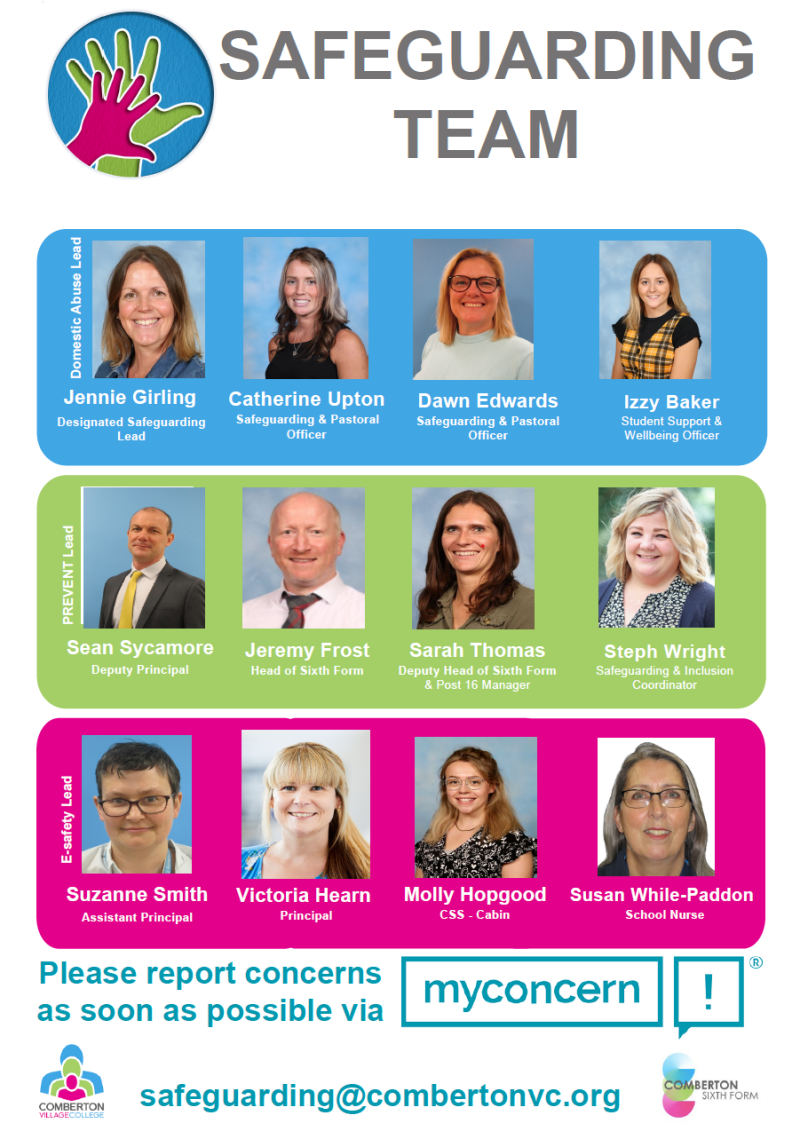
If you are worried about your own safety, or have concerns about a friend, colleague, child or young person connected to Comberton Village College, please contact us at [email protected].
Safeguarding and promoting the welfare of children is everyone’s responsibility. Every adult who encounters children, their families, or carers has a role to play. At Comberton Village College, all staff are trained to take a child‑centred approach, ensuring that decisions are always made in the best interests of the child.
No single professional has a complete picture of a child’s circumstances. To ensure children receive the right help at the right time, staff share relevant information on a strictly need‑to‑know basis. The Safeguarding Team collates and manages this information to ensure concerns are addressed appropriately.
- Vigilant Staff All staff are alert to changes in behaviour or wellbeing and listen carefully to pupils’ concerns. While pastoral teams play a key role, safeguarding is the responsibility of every member of staff.
- Designated Safeguarding Team A dedicated team responds daily to concerns raised by pupils, staff, parents and external agencies. They ensure that issues are followed up and that appropriate support is put in place.
- Pupil Voice Pupils are encouraged to speak to a trusted adult, contact the Safeguarding Team directly, email [email protected], or use the Concerned About a Child button on our website.
We work hard to build positive, trusting relationships with pupils and families so that together we can keep children safe.
To help families understand the issues affecting children and young people today, we provide information and resources via the menu on the left. We hope these materials are useful.
If you have concerns about your child or any student at Comberton Village College, please contact us at [email protected] or use the Concerned About a Child button at the top of this page.
Please note that the safeguarding inbox is checked periodically during holiday periods.
If you believe a child may be at risk during this time, please contact Cambridgeshire Children’s Social Care:
- 0345 045 5203 (office hours)
- 01733 234 724 (out of hours)
If a child is in immediate danger, call 999.
Under Section 175 of the Education Act 2002 and associated regulations, schools must have arrangements in place to safeguard and promote the welfare of children. We aim to provide a safe, welcoming environment where children are respected and valued.
Staff are required by law to pass on any information that raises concern about a child’s welfare, including risks of neglect, physical, emotional or sexual abuse, or exploitation. Records of safeguarding concerns may be kept. Wherever possible, staff will discuss concerns with parents/carers, including referrals to other agencies.
Local procedures state that consent should normally be sought before sharing information with Children’s Social Care, unless doing so would place a child at risk of significant harm or compromise evidence. Professionals may share information without consent when necessary to protect a child.
Where special category personal data must be shared, the Data Protection Act 2018 includes a specific condition allowing information sharing for safeguarding purposes. Information is shared securely, sensitively, and only when necessary and proportionate.
Schools will contact Children’s Social Care when there is reasonable cause to suspect a child is suffering, or likely to suffer, significant harm. Occasionally concerns prove unfounded, but staff act in accordance with the law and always in the best interests of children.
Under Section 3(5) of the Children Act 1989, any person caring for a child may take reasonable action to safeguard their welfare. In rare circumstances, this may mean keeping a child on school premises while Social Care or the Police investigate concerns.
Child Exploitation
Child exploitation occurs when an individual or group takes advantage of a young person under 18 for their own gain. This can include sexual exploitation or forcing a child to commit criminal activity. Although this is not something we commonly see at Comberton Village College, it is important that we all understand the signs and report any concerns.
Criminal Exploitation – County Lines
One of the most common forms of criminal exploitation involves children being coerced into selling drugs for older individuals. They are often promised money, designer items and a sense of belonging, but the reality is far more dangerous. Many end up isolated, hungry, frightened and at significant risk.
Drug-related exploitation is not limited to major cities. Drugs are typically imported into large urban areas and then distributed through networks that use young people to transport them into rural and suburban communities.
More information is available on the Cambridgeshire Police and NSPCC websites.
Child Sexual Exploitation (CSE)
Child sexual exploitation occurs when a young person is manipulated or coerced into sexual activity by someone older, often under the guise of a relationship. Perpetrators may buy gifts, offer attention or affection, and create a false sense of trust before abusing the child.
CSE can affect any child, at any time, in any community, which is why tackling it remains a priority.
Further guidance on the signs of exploitation can be found on the Cambridgeshire Police, NSPCC, and Cambridgeshire & Peterborough Safeguarding Partnership websites.
Reporting Concerns
If you are worried about a student at Comberton Village College, please contact [email protected].
If the concern is urgent, call 101, or in an emergency always dial 999.
Child-on-child abuse is most likely to include, but may not be limited to:
- bullying (including cyberbullying, prejudice-based and discriminatory bullying)
- abuse in intimate personal relationships between peers
- physical abuse such as hitting, kicking, shaking, biting, hair pulling, or otherwise causing physical harm
- sexual violence, such as rape, sexual assault (this may include an online element)
- sexual harassment, such as sexual comments, remarks, jokes, and online sexual harassment
- causing someone to engage in sexual activity without consent
- consensual and non-consensual sharing of nude and semi-nude images and/or videos (sexting)
- upskirting, which typically involves taking a picture under a person’s clothing without their permission
- initiation/hazing type violence and rituals (this could include activities involving harassment, abuse or humiliation used as a way of initiating a person into a group, which may include an online element)
At Comberton Village College our focus will be on addressing child-on-child abuse (sexual & physical abuse, cyber bullying, and pornography) as well as healthy relationships and consent through educational assemblies and PSHE.
Our aim is to educate all students on appropriate behaviours, attitudes, and languages. Inappropriate behaviours, attitudes and languages can contribute to a culture of sexual harassment which could lead to sexual violence as presented in the pyramid below.
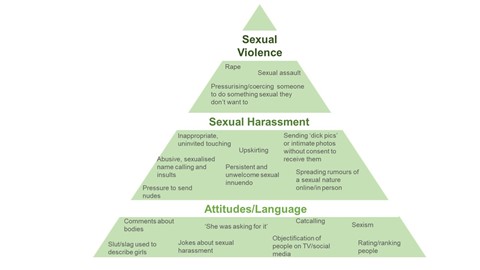
Age-appropriate assemblies are conducted in school for all students and staff receive training and reminders about child-on-child abuse and will be:
- ‘Calling Out’ students whose behaviour, attitude and language are unacceptable/harmful.
- ‘Calling In’ students to educate, helping students rethink and potentially change their behaviour, attitude, and language.
We encourage and support students to report any incidents of child-on-child abuse and the following posters, designed by students at Comberton Village College are displayed around school.
Domestic Abuse Lead at Comberton Village College is:
Mrs Jennie Girling – Designated Safeguarding Lead – [email protected]
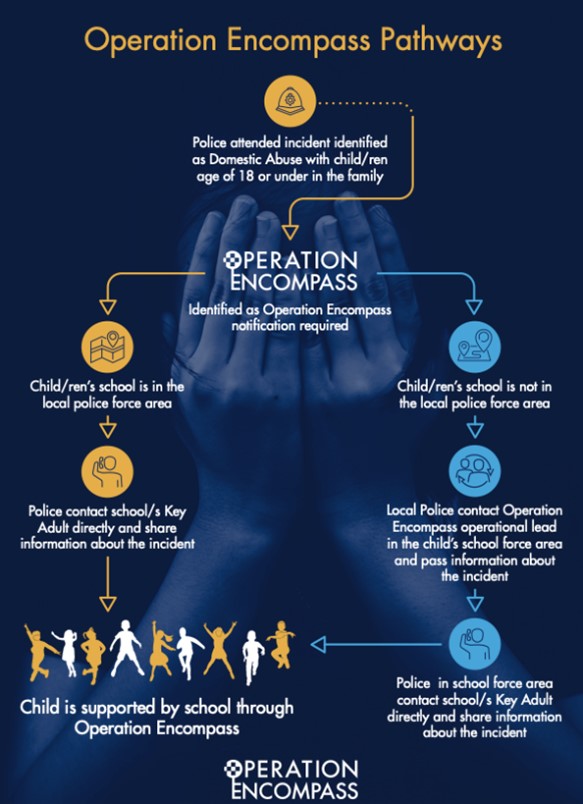
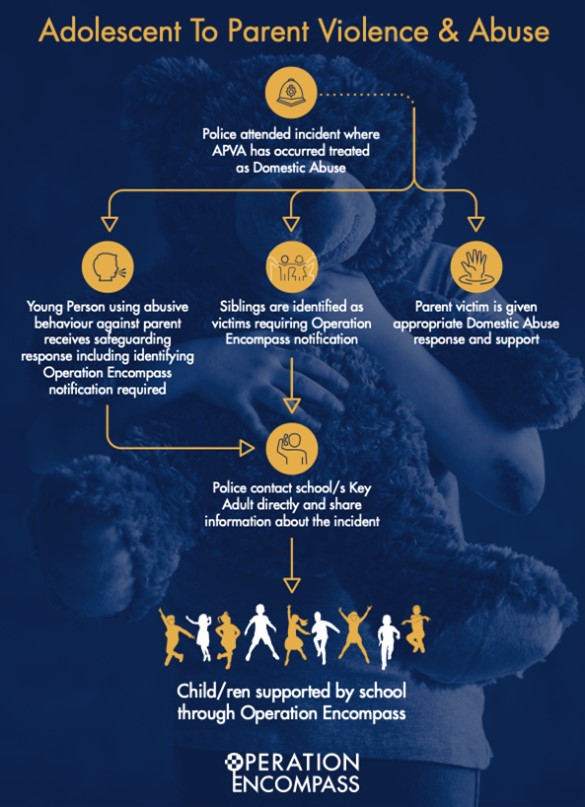
Comberton Village College is working in partnership with Cambridgeshire Police and Cambridgeshire County Council to identify and provide appropriate support to pupils who have experienced domestic abuse in their home; this scheme is called Operation Encompass.
To achieve this, Cambridgeshire’s Education Safeguarding Team will share police information of all domestic incidents, where one of our pupils has been present, with the Designated Safeguarding Lead(s) (DSL)/Domestic Abuse (DA)Lead. On receipt of any information, the DSL/DA Lead will decide on the appropriate support the child may require.
Government Definition of Domestic Abuse and Violence:
Any incident or pattern of incidents of controlling, coercive, threatening behaviour, violence, or abuse between those aged 16 or over who are, or have been, intimate partners or family members regardless of gender or sexuality. The abuse can encompass, but is not limited to:
- psychological
- physical
- sexual
- financial
- emotional
Controlling behaviour
Controlling behaviour is a range of acts designed to make a person subordinate and/or dependent by isolating them from sources of support, exploiting their resources and capacities for personal gain, depriving them of the means needed for independence, resistance and escape and regulating their everyday behaviour.
Coercive behaviour
Coercive behaviour is an act or a pattern of acts of assault, threats, humiliation and intimidation or other abuse that is used to harm, punish, or frighten their victim.
1 in 5 children have been exposed to domestic abuse and it is present in 60% of all serious case reviews. It is estimated that children are present in 80% of incidents.
Report a Concern
If you are concerned about a student or young person at Comberton Village College email the Domestic Abuse Lead, Jennie Girling and [email protected]. If this is of an urgent matter, please call 101 or in an emergency always call 999.
PREVENT Lead at Comberton Village College is:
Mr Sean Sycamore – Deputy Principal – [email protected]
Prevent Action Plan 2024-25 (CVC & Sixth Form) can be found here.
We are all here to protect students and young people from harm. It can be hard to know when extreme views become something dangerous. And the signs of radicalisation are not always obvious.
It might be nothing, it might be something. But whatever you are worried about, here is some information and links to resources to help.
Radicalisation is the process by which a person comes to support terrorism and extremist ideologies. If you are worried someone close to you is becoming radicalised act early and seek help. The sooner you reach out, the quicker we can protect the person you care about from being groomed and exploited by extremists.
Police forces across the country have specially trained Prevent Officers who work alongside other organisations through a Home Office programme called Prevent to help people vulnerable to radicalisation move away from violent extremism.
Friends and family are best placed to spot the signs, so trust your instincts.
Radicalisation can be very difficult to spot. Signs that may indicate a child is being radicalised include:
- Social withdrawal and isolation
- Difficult and moody behaviour
- Increased internet use
- New friends, clothing, change of appearance
- Loss of interest in activities they used to enjoy
- Following extremist material through social media
- Resentment to authority figures and “use” vs “them” mentality.
- Increasingly secretive
- Inappropriate language
- Scripted speech
- Intolerance to views of others
To find out more about how to help someone close to you below are some resources to provide guidance and support:
gov.uk/protecting-children-from-radicalisation-the-prevent-duty
nspcc.org.uk/dedicated-helplines/protecting-children-from-radicalisation
Staff at Comberton Village College are trained on PREVENTion of Radicalisation to be aware of the threat, spotting the signs and how to report any concerns.
Report a Concern
If you are concerned about a student or young person at Comberton Village College email the PREVENT Lead, Sean Sycamore and [email protected]. If this is of an urgent matter, please call 101 or in an emergency always call 999.


