





A-Level courses
This information aims to allow you to explore each of the subjects we offer here at CSF. Please use the menu on the left hand side of this page to navigate through the A-Level, BTEC and additional study courses available.
On this subject page you will find links/downloads which support admissions along with curriculum information for our current students.
- A curriculum overview document for each subject which details the sequence of teaching and learning, along with the development of key skills
- An independent learning guide, to support students in each subject with the demands of homework, revision, and their independent learning.
- Each subject also has links to our ‘Super-curricular’ initiative, which aims to develop you wider understanding of academic subjects and support your learning – click here for more information.
Qualification
Advanced Level Art & Design
EDUQAS
Subject Leader
Mr Joseph
Entry Requirements:
Minimum Entry Requirements:
5 x 5s
4 in English and Maths
Subject Specific Entry Requirements:
6 in Art at GCSE
Why study Art & Design?
We live in a highly visual world. Skilled and knowledgeable artists are ideally placed to interpret and analyse the complex languages of art and design. By learning what it means to be a creative individual and responding to ancient civilisations and contemporary cultures, we hope our students will become immersed in a world of creativity and experimentation that will lead them towards a greater understanding of art and culture.
What can I do with Art & Design after A-Level?
A Level Art and Design is strongly recommended if you wish to study at foundation or degree level. This can lead to careers in Fine Art, Illustration, Architecture, Animation, Furniture Design, Interior Design, Graphic Design, Fashion and Textiles, Photography, Digital and Print Media. The course is designed to foster and encourage individual creativity and inspiration as well as involving it’s students in building their facility to research and analyse as they seek to interpret and change the world around them. All of these are fantastic life skills and would be essential to many other less obvious career paths like Science for example. The possibilities are endless!
Art & Design Extras
In addition we offer compulsory life drawing classes and the opportunity to learn advanced photoshop skills in our dedicated editing suite. There will be study trips to Paris as well as regular visits to London museums and galleries of contemporary art such as Tate Modern, the V&A and The Saatchi Gallery
What will I study?
The Art course at Comberton is well-equipped to give students the best possible start to their potential career in the world of art and design. Our grades are among the best in the sixth form and we have recently out-performed the other main sixth form colleges in the area. Many of our students have gone on to study Art and Design subjects at foundation and degree level and we regularly have students accepted by London Art College.
Qualification
Advanced Level Biology
OCR
Subject Leader
Mrs R James
Entry Requirements:
Minimum Entry Requirements:
5 x 5s
4 in English and Maths
Subject Specific Entry Requirements:
6 in GCSE Biology if doing single sciences
Or 6,7 in GCSE Double Science
6 in GCSE Maths
Why study Biology?
Biology is the ‘study of life.’ It allows us to understand the workings of our own bodies and the world around us. Today, biological science is still at the forefront of ground-breaking and rapid developments that will shape the future of human kind. Do you want to be part of these? If so, Biology is the course for you.
What can I do with Biology after A-Level?
Many students follow this course with a biologically-related degree that would lead to occupation in a number of areas including: medicine, dentistry, health care, veterinary medicine, forensic science, physiotherapy, environmental work, food science, biological research, sports science and pharmacy. Other students find the broad base of skills and knowledge gained from the course useful when pursuing degree courses or careers in other areas including business, marketing, journalism, and psychology.
Biology Extras
The Biology course involves a range of hands-on practical lab work studies. Due to our close proximity to the University of Cambridge and the local science parks and institutes students will be able to attend lectures and seminars either remotely or in person. We have developed links with a number of these places including the Babraham Institute which offer virtual or actual opportunities for our students. Alongside this we undertake field work days when students can develop their practical investigation skills. We also offer support sessions for students when extra help is needed.
Qualification
Advanced Level Business
AQA
Subject Leader
Mr W Davitt
Entry Requirements:
Minimum Entry Requirements:
5 x 5s
4 in English and Maths
Subject Specific Entry Requirements:
5 in GCSE Maths
Why study Business?
Business is front-page news. The way businesses operate is under greater scrutiny than ever before. If you are interested in the world of business and its innovative and exciting theories and you would like to examine, understand and practise the skills, knowledge and attributes of successful entrepreneurs, then this is a fantastic opportunity for you.
What can I do with Business after A-Level?
Business Studies will allow you to go to university to study a variety of subjects. Careers in finance, accounting, marketing, management and other ‘business related’ areas are also possibilities for students who have studied this subject.
Business Extras
The course is delivered through a variety of case studies, videos, textbooks, student-centred activities and possible visits to organisations. Additionally, you will have the opportunity to attend revision conferences and have access to excellent business-related facilities.
Qualification
Advanced Level Chemistry
OCR
Subject Leader
Dr S Harding
Entry Requirements:
Minimum Entry Requirements:
6 in GCSE Maths
Why study Chemistry?
It’s not all white lab coats and mixing chemicals, chemistry has a significant impact on everyday life. It is a creative science, if you can’t dream the question how will you discover the answer?
Chemistry is often referred to as the central science, linking with all the other sciences and underpinning branches of technology. Even if you are not thinking about a career in any of these, the benefit of chemistry studies is endless. You will have: collated and analysed data, written scientific reports, used logical thought processes, applied prior knowledge to solve problems, learnt to pay attention to detail when conducting experiments and observations as well as gaining scientific knowledge of chemistry.
|
Degree Area |
Preferred A-Level Subjects |
||
| Chemical Science |
Chemistry |
Maths |
Physics |
|
Medicine & Medical Sciences |
Chemistry |
Biology |
Maths or Physics |
|
Biological Sciences |
Biology | Chemistry | Maths |
|
Anatomy and Physiology |
Biology | Chemistry or Physics Maths | |
|
Food Sciences |
Maths |
Physics |
Chemistry |
What can I do with Chemistry after A-Level?
A-Level Chemistry is a must if you want to study any kind of medicine, chemical sciences, medical sciences and anatomy and physiology. It is also a recommended A-level for food science, and biological sciences and chemical engineering. There are a multitude of careers that you can do with a chemistry background from investor relations managers, publishing, patent attorney and policy advisers to governments.
Chemistry Extras
The Chemistry Department is dedicated to developing the whole individual, not just in terms of academic attainment but also with regard to their interest and enthusiasm for the subject. Students will have opportunities to go on trips to hear Chemists who are at the forefront of new and exciting research, trips to various universities to use degree-level labs, and trips that put the learning in lessons into context of real life (nuclear power station, National Portrait Gallery and work with the ‘Science and Engineering in Arts Heritage and Archaeology’ group). We also run a Chemistry Day involving student presenting their own research projects in similar way to science fairs run by the Nuffield Research Placement and PhD fairs.
Qualification
Advanced Level Computer Science
AQA
Subject Leader
Mr R Potter
Entry Requirements:
Minimum Entry Requirements:
5 x 5s
4 in English and Maths
Subject Specific Entry Requirements:
6 in GCSE Maths
6 in Computing if taken at GCSE
Why study Computer Science?
With exponential growth in the digital economy and the recent explosion of new technologies including mobile, cloud and big data, we have entered an age of unprecedented demand for skilled IT workers, particularly in the application development space.
According to the European Commission, the number of IT jobs is growing at a rate of 100,000 a year.
Computer Science falls into three categories:
- designing and building software or hardware
- developing effective ways to solve computing problems, such as storing information in databases, sending data over networks or providing new approaches to security problems
- devising new and better ways of using computers and addressing particular challenges in areas such as robotics, computer vision, or digital forensics (although these specialisations are not covered at AS/A-Level Computer Science)
What can I do with Computer Science after A-Level?
You could study a Computer Science course, Software Engineering or a Web Applications course at university. Other options might be Digital Forensics, Robotics, Game Design, Remote Sensing the list of possible areas of study is long, and growing all the time as new applications for technology are invented.
Qualification
Advanced Level Drama & Theatre Studies
AQA
Subject Leader
Mr J Frost
Entry Requirements:
Minimum Entry Requirements:
5 x 5s
4 in English and Maths
Subject Specific Entry Requirements:
6 in Drama if taken at GCSE
Why study Drama & Theatre Studies?
The Drama and Theatre Studies course aims to develop students’ interest and enjoyment in drama and theatre both as participants and as informed members of an audience, fostering an enthusiasm for and critical appreciation of the subject. It is dedicated to providing a creative platform where the students develop their physical, social and emotional skills. It considers theatre from the perspective of the director, the actor and the designer; and is taught through experiential and practical lessons allowing us to thrive as an exciting, highly creative and enjoyable subject area.
What can I do with Drama & Theatre Studies after A-Level?
The list is endless. Many students will take a degree in Theatre, Drama, Film, Media or Performing Arts. Others will gain entry into a specialist drama college such as Central School or LAMDA. There are also the opportunities to work in technical design and production in theatre, film or television.
You only have to see the credits of a play to see how many people work on a production in different capacities or work in newspapers, magazines or journalism in general. University statistics show drama graduates have one of the highest employment rates because the subject develops self-confidence and produces well rounded, articulate individuals with the ability to adapt to challenging situations.
Drama & Theatre Extras
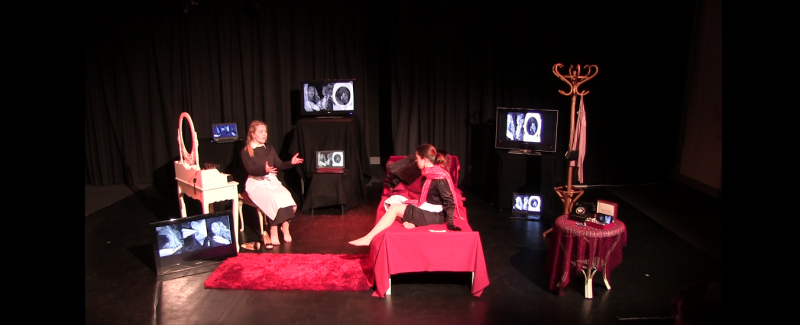
A-Level Drama and Theatre Studies enables you to see a variety of professional productions; as well as meeting and attending workshops led by practitioners from various theatre companies. In the last few years our students have seen productions at theatre such as the National Theatre, Regents Park Theatre, the Hammersmith Lyric and Cambridge Arts; and worked practically with the likes of RADA, Cheek by Jowl and Frantic Assembly.

Qualification
Advanced Level Economics
AQA 7136
Subject Leader
Mr W Davitt
Entry Requirements:
Minimum Entry Requirements:
5 x 5s
4 in English and Maths
Subject Specific Entry Requirements:
6 in Math GCSE
Why study Economics?
Economics is fundamental to our world. Any news programme will almost inevitably contain several economic issues. Do you want to understand these, develop your own views on them and consider what you feel the Government should or should not do about them? If so, then study Economics.
What can I do with Economics after A-Level?
Economics provides an excellent range of knowledge and skills relevant to the study of many subjects at university and many jobs and professions. Economics is also a very popular degree subject in its own right. Many of those studying Economics at A-level decide to continue their study of the subject into higher education. Economics graduates are said to be some of the most employable graduates in the job market.
Economics Extras
Economics students will be able to attend a range of visits and conferences relating to their course and wider Economics ideas and issue.
Qualification
Advanced Level English Language
AQA
Subject Leader
Mrs E Norman
Entry Requirements:
Minimum Entry Requirements:
5 x 5s
4 in English and Maths
Subject Specific Entry Requirements:
6 in GCSE English Language or Literature
Why study English Language?
Do you enjoy being at the cutting edge of a subject? Do you ever wonder why it is that accent and dialogue really do matter? Do you have a flair for creative writing? If so, then English Language is the course for you.
English Language is a vital part of our individual lives, the behaviour of social groups and the structure of our whole society. We are continually talking and texting, listening to friends and employers, reading websites, telling stories and giving advice – this is what makes the study of English Language so topical and so relevant.
What can I do with English Language after A-Level?
A variety of occupations will be open to you, including publishing, journalism, media, law and teaching. In addition, the great variety of skills acquired are highly regarded by both employers and universities and are also valuable in their own right. Apart from supporting other subject areas, English Language offers an ideal preparation for a university degree in English or a related subject.
English Language Extras
You will have the opportunity to listen to a range of presentations from professionals in the field of publishing and journalism. Students will also have the chance to visit local news providers and see journalism at work. We will also make use of relevant exhibitions and opportunities as they arise.
Qualification
Advanced Level English Literature
AQA
Subject Leader
Mrs E Norman
Entry Requirements:
Minimum Entry Requirements:
5 x 5s
4 in English and Maths
Subject Specific Entry Requirements:
6 in English Literature GCSE
Why study English Literature?
Do you love reading? Do you enjoy gaining insights into different worlds and different people? Would you like the chance to discuss the books you read, with enthusiastic teachers and students – and be challenged to support your ideas? If so then English Literature is the course for you!
This course will help you develop your skills of critical analysis through the study of a diverse range of texts, ranging from the sixteenth century to the present day. You will need to enjoy the challenge of writing essays and mini-essays every week as well as joining in with lively classroom discussions of literary ideas!
What can I do with English Literature after A-Level?
A wide variety of occupations will be open to you ranging from journalism to law, social services and teaching (to name just a few). The analytical and cultural skills acquired are highly regarded by universities and future employers making A-Level Literature a ‘facilitator subject’ as well as being valuable in its own right.
English Literature Extras
Seeing plays in performance will help you to develop a deeper understanding of the texts studied.: It is hoped this will include the chance to take part in a subject conference in London and potentially in a theatre workshop visit to Stratford upon Avon. In addition, links with the University of Cambridge will provide opportunities to attend occasional lectures further to complement the range and detail of your AS and A-Level experiences, here at Comberton Sixth Form.
Qualification
Advanced Level Environmental Science
AQA
Subject Leader
Dr S Smith
Entry Requirements:
Minimum Entry Requirements:
Why study Environmental Science?
Living in an age with increasing numbers of environmental challenges we need to find real life solutions to ensure the sustainability of our planet. This makes studying environmental science a key part of this process. The course will make you more aware of what is happening to the Earths environment and the issues we are currently facing. Using real life case studies, you will investigate and conduct experiments researching the best methods to obtain data. Applying biological, chemical, and physical principles to environmental issues and to provide solutions to environmental problems.
What can I do with Environmental Science after A-Level?
You can study environmental science degree leading to careers in environmental management, horticulture, minerals surveyor, water quality scientist. You may also work for the environmental agency and DEFRA.
What will I study?
- The Living Environment
- The physical environment
- Energy resources
- Pollution
- Biological resources
- Sustainability
- Research methods
Qualification
Advanced Level Film Studies
EDUQAS
Subject Leader
Ms J Roffey
Entry Requirements:
Minimum Entry Requirements:
5 x 5s
4 in English and Maths
Subject Specific Entry Requirements:
6 in a humanities subject or English GCSE
Why study Film Studies?
Do you love films? Are you interested in how films are created? Have you ever thought about the physical experience of seeing films or how films are marketed to you? If you have a keen interest in Cinema: its history, its relationship with an audience and its cultural diversity, then this is the course for you!
What can I do with Film Studies after A-Level?
Having studied a rich variety of film texts, you will have gained analytical insights into how films are created and marketed, how they reflect the concerns of the societies that produce them and how consumers engage with the world of film in the twenty-first century. This will complement other areas of study and prove a cultural touchstone for a variety of occupations including Politics, Journalism and Media/Digital Communications or for working in TV, Radio and Film industries.
Film Studies Extras
- First hand experience of film being created, at a Film studio.
- Excursions to Film/TV Production facilities for a taste of 21st century editing and production techniques.
- Access to World Cinema new releases.
- Experiencing film in its intended location: Classic Cinema trips.
Qualification
Advanced Level French
AQA
Subject Leader
Mrs R Cox
Entry Requirements:
Minimum Entry Requirements:
5 x 5s
4 in English and Maths
Subject Specific Entry Requirements:
6 in GCSE French
Why study French?
Do you hope to one day work abroad or speak a language fluently? Are you interested in an academically challenging course with a strong practical application? If so, then studying a Modern Language like French to A-level could be for you.
The French course will develop your language skills, cultural and international understanding, and lifelong communication, analytical and research skills which can be applied at work or for leisure purposes.
What can I do with French after A-Level?
Many students follow this course with a languages degree, which usually involves learning two languages alongside literature and/or linguistics. However, languages also complement any other subject, and are often combined with popular degree courses such as Law, Business, Marketing, History and Engineering. Language graduates are in high demand by employers in the UK and abroad.
French Extras
Students will have access to our language laboratory offering individual language-learning facilities. Foreign Language Assistants will be available to develop your speaking and listening skills through individual or small group conversation. In addition, the department offers a range of opportunities in partnership with local universities and there will also be opportunities to spend time in France.
Qualification
Advanced Level Geography
AQA
Subject Leader
Mr S Aitken
Entry Requirements:
Minimum Entry Requirements:
5 x 5s
4 in English and Maths
Subject Specific Entry Requirements:
6 in GCSE Geography
Why study Geography?
Does the Earth fascinate you? If it does, Geography is the subject for you. This is a topical and contemporary course focusing on many issues facing the world both today and in the future. It will help you to understand how these changes are affecting societies and the natural environment and look at ways of managing them sustainably.
What can I do with Geography after A-Level?
Many students follow this course with a geography-related degree. The course also has clear links with a range of other subjects which are popular degree courses such as biology, economics, business studies, and environmental science. Other students find the skills and knowledge gained from the A-level Geography course useful when pursuing degree courses or careers in other areas including journalism, travel, ICT, finance, meteorology, environmental management, planning and marketing.
Geography Extras
Geography offers you a range of fieldwork opportunities in the local area, within the UK and further afield (Iceland). In addition, links with the Geographical Association and Cambridge University will allow students to attend lectures on relevant geographic topics at the University.
Qualification
Advanced Level German
AQA
Subject Leader
Mrs R Cox
Entry Requirements:
Minimum Entry Requirements:
5 x 5s
4 in English and Maths
Subject Specific Entry Requirements:
6 in GCSE German
Why study German?
Do you hope to one day work abroad or speak a language fluently? Are you interested in an academically challenging course with a strong practical application? If so, then studying a Modern Language like German to A-level could be for you.
The German course will develop your language skills, cultural and international understanding, and lifelong communication, analytical and research skills which can be applied at work or for leisure purposes.
What can I do with German after A-Level?
Many students follow this course with a languages degree, which usually involves learning two languages alongside literature and/or linguistics. However, languages also complement any other subject, and are often combined with popular degree courses such as Law, Business, Marketing, History and Engineering. Language graduates are in high demand by employers in the UK and abroad.
German Extras
Students will have access to our language laboratory offering individual language-learning facilities. Foreign Language Assistants will be available to develop your speaking and listening skills through individual or small group conversation. In addition, the department offers a range of opportunities in partnership with local universities and there will also be opportunities to spend time in Germany.
Qualification
Advanced Level Art & Design (Graphic Communication)
AQA
Subject Leader
Mrs K Allen
Entry Requirements:
Minimum Entry Requirements:
5 x 5s
4 in English and Maths
Subject Specific Entry Requirements:
None
Why study Graphic Communication?
Are you creative and imaginative? Do you enjoy exploring ideas and looking at things in different ways? If so, you should consider a course in Graphic Communication. You will enjoy developing your understanding of the visual world, learning practical skills and responding to ideas and issues in ways that are personal to you.
Graphic Communication will give you the skills to produce personal creative work and develop your understanding of Graphic Design. You will develop your knowledge of materials and techniques, and the skills to communicate ideas and information visually. This includes learning relevant computer aided design skills in Photoshop, InDesign and Illustrator. It will help you to develop an effective personal visual language and develop your understanding of historical and contemporary influences on design.
What can I do with Graphic Communication after A-Level?
Graphic communication opens the door to a large number of fascinating and rewarding specialisms and careers in industry, commerce and the media. Relevant degree options include: animation, digital arts, graphic communication, graphic design, graphic and communication design, media design, illustration, printmaking, packaging design, typographic design.
Other career opportunities include: advertising, designing for film, interior design, marketing, publishing, production design, teaching, web and app design.
Graphic Communication Extras
It is important that you keep up to date with the latest developments in the design world. This will include regular trips to museums and galleries (some of which will be in your own time), research on current issues and design prospects online and in social media, and keeping a visual diary of primary resources, including observational drawings.
Qualification
Advanced Level History
OCR
Subject Leader
Miss J Landy
Entry Requirements:
Minimum Entry Requirements:
5 x 5s
4 in English and Maths
Subject Specific Entry Requirements:
6 in GCSE History
Why study History?
Apart from the transferable skills that history gives us, it is important to study history because:
- History is a fascinating subject;
- History isn’t just about the past. It plays a vital role in helping us understand the present: who we are, where we have come from, the people we meet, the world and societies in which we live, the way people behave, and where we are going;
- History contributes to understanding between different cultures and people.
What can I do with History after A-Level?
With History A-level, students can go on to study the subject at university. However, there is a huge number of transferable skills which students develop through studying History: communication skills (written and verbal), the ability to evaluate critically evidence in a variety of forms, and the ability to evaluate critically arguments and interpretations. It is very highly regarded by employers and will equip students for many different occupations, including teaching, law, journalism and working in the Civil Service.
History Extras
- The department has links to Cambridge university and other leading institutions and regularly organises visits from historians and academics.
- There will be visits to the Houses of Parliament and the Churchill War Rooms in London.
- Students will get the opportunity to participate in lessons from the Auschwitz Programme.
Qualification
Advanced Level Mathematics & Further Maths
AQA
Subject Leader
Mrs C Hattab-Reidy
Entry Requirements:
Minimum Entry Requirements:
5 x 5s
4 in English and Maths
Subject Specific Entry Requirements:
7 in GCSE Maths
Why study Mathematics?
Do you enjoy solving puzzles? If so, Mathematics is the subject for you. At its core, the subject is about patterns and structure. The A-Level Maths aims to further develop your logical-thinking and problem-solving skills, extending your understanding of mathematics. Within the course you will have opportunities to explore the relationship between number sets, uncover the beauties of calculus and its applications, appreciate the links between geometrical and algebraic dependencies as well as play with a centre of gravity.
What can I do with A-Level Maths after Sixth Form?
Mathematics sets strong foundations for a variety of related degrees. The subject has clear links with courses such as Chemistry, Physics, Economics or even Biology and Psychology. Students with qualifications in Advanced Level Mathematics find the skills and knowledge gained from the course useful when pursuing careers in areas such as medicine, engineering, veterinary science, finance, accounting, computing, science, law and marketing. National statistics show that students who took Advanced Level Mathematics ended up earning, on average, 10 per cent more than those of similar ability and background who did not.
Mathematical Extras
Our focus will always be not only to support you to achieve the best you can in the qualification itself, but also to enrich your learning in the context of mathematical ideas. Mathematics offers you an opportunity to be involved in national competitions, such as the Senior Maths Challenge both individually and in teams. In addition, links with the Royal Institution and Cambridge University will allow you to attend inspiring lectures and events showing mathematics at its best. You will have the opportunity to enjoy exploring mathematics by attending nationally run talks and shows as well as participating in our Sixth Form Mathematics trips.
Qualification
Advanced Level Mathematics & Further Maths
AQA
Subject Leader
Mrs C Hattab-Reidy
Entry Requirements:
Minimum Entry Requirements:
5 x 5s
4 in English and Maths
Subject Specific Entry Requirements:
Grade 8 or 9 at GCSE Mathematics.
If your school currently offers either FSMQ Additional Mathematics or Level 2 Further Mathematics we would expect you to be taking this. If your school does not offer either of these qualifications, we would encourage you to do some self-study of the content before the start of the course in September.
Why study Double Maths?
Do you enjoy maths and wish to study it in more depth? If so, Double Maths is the course for you. It further develops the ideas studied in A-Level Maths and introduces new mathematical topics to bridge the gap to degree level mathematics and other subjects with a high mathematical content (such as Engineering/Physics/Computer Science/Medicine). Students who gain Advanced Level qualifications in both Mathematics and Further Mathematics are highly employable and, since it demonstrates a student’s ability to tackle more advanced topics, it is desirable for many subjects at university level.
What can I do with Double Maths after Sixth Form?
Further Mathematics is taken in combination with Mathematics and sets strong foundations for a variety of related degrees. The subject has clear links with courses such as Computer Science, Engineering, Physics, Material Science or even Chemistry. Advanced Level Further Mathematics students find the skills and knowledge gained from the course useful when pursuing careers in areas such as medicine, engineering, veterinary science, finance, computing and any scientific discipline.
Double Maths Extras
In addition to the events offered to students of the Advanced Level Mathematics course, there will be further opportunities for students to extend their mathematical horizons. In particular, students can elect to tackle extension work in preparation for university interviews and additional examinations, such as MAT— the Mathematics entrance exam for Oxford, AEA – Advanced Extension Award or STEP – used for admissions to Mathematics at Cambridge. At Comberton Sixth Form we will support you in preparation for those as well as support you if you choose to go on to study Mathematics or similar at degree level.
Qualification
Advanced Level Music
Edexcel
Subject Leader
Mr B Parker
Entry Requirements:
Minimum Entry Requirements:
5 x 5s
4 in English and Maths
Subject Specific Entry Requirements:
6 in GCSE Music, if taken and at least one instrument/voice to Grade 5
If music is not taken at GCSE then Grade 5 or above in an instrument and theory is required.
Why study Music?
Music A-level is about building skills in performance and composition and gaining a broad musical knowledge through the study of set works. Choose to study Music if you are a proficient instrumentalist or singer and/or have a strong interest in composing your own music. The A-level Music course is a valuable qualification in its own right as it not only demonstrates academic, practical and creative skills but also highlights your qualities of self-discipline and commitment.
Music students should be accomplished instrumentalists or singers of at least Grade Five standard on at least one instrument or voice and Grade Five standard for theory.
What can I do with Music after A-Level?
You may wish to study Music in Higher Education either on an academic degree course or on a more practically based course for performers. The A-Level provides a sound basis for students wishing to proceed to degree courses in Music or Performing Arts. It can lead to careers in teaching, performing and composition as well as related areas in publishing and media. It combines well with most other subjects but compliments in particular Theatre Studies and Music Technology.
Music Extras
It is assumed that those taking A-level will wish to contribute significantly to the many performance opportunities organised by the music department and to find time to visit live events elsewhere. Arrangements will be made for you to attend numerous professional concerts in London and Cambridge throughout the year and to participate in workshops led by Cambridge University Outreach.
You will be encouraged to participate in the well-established exchange with Modelleschule Obersberg, Bad Hersfeld, Germany, undertaking ongoing, joint online composition and research projects. There is also an opportunity to visit Vienna to undertake an investigation of the working lives of set-work composers Haydn, Mozart, Schoenberg and Webern.
Qualification
Advanced Level Music Technology
Edexcel
Subject Leader
Mr B Parker
Entry Requirements:
Minimum Entry Requirements:
5 x 5s
4 in English and Maths
Subject Specific Entry Requirements:
None
Why study Music Technology?
The Music Technology courses aim to develop the knowledge and skills required for the production of music (mainly focused on popular and jazz genres) using MIDI sequencing and studio recording techniques. You may have had the opportunity to produce music as a part of your GCSE course or you may simply have a genuine, keen interest in music as a performer. A degree of practical instrumental skill is extremely helpful. Whatever your background, if you are keen to develop your musical/technical skills to learn about arranging, composing, recording and producing music, Music Technology could be the ideal course for you. Music Technology is a good companion for Music, Media Studies, Theatre Studies, Information and Communication Technology, Maths and Physics.
What can I do with Music Technology after A-Level?
The skills developed during this course can find use in a wide range of careers that may include sound recording, media music production, composition, radio, television and the film industry, commercial advertising, musical instrument retail, software design, teaching and journalism. There is an ever increasing number of degree courses at universities and music colleges specialising in music technology that can lead directly to the career options mentioned above, including some where music technology can be combined with a range of other subjects.
Music Technology Extras
Built into the course, there are opportunities to support and run live gigs in the local area, including arts festivals and community arts projects within catchment. You will also benefit from partnerships with The Junction and local studios such as Half-Ton Studios and Vertical Rooms.
It is assumed that those taking A-level will wish to contribute significantly to the many production opportunities organised by the music department and to experience live events elsewhere. The music department will make arrangements for you to attend numerous professional concerts in London and Cambridge throughout the year and to participate in workshops led by Cambridge University Outreach. You will be encouraged to participate in the well-established exchange with Modelleschule Obersberg, Bad Hersfeld, Germany, undertaking ongoing, joint online composition and research projects.
Qualification
Advanced Level Religious Studies
OCR
Subject Leader
Mrs H Powell
Entry Requirements:
Minimum Entry Requirements:
5 x 5s
4 in English and Maths
Subject Specific Entry Requirements:
6 in Religious Studies if taken at GCSE
Or 6 in a humanities subject
Why study Religion, Philosophy & Ethics?
Religion, Philosophy & Ethics is an ever-popular exam course, which deals with fundamental life questions that will have an affect on all of us at some time. The course involves the establishment of a body of key knowledge and understanding, as well as developing important skills such as critical analysis and evaluation of a variety of scholarly views, as well as improving essay-writing techniques.
What can I do with Religion, Philosophy & Ethics after A-Level?
As a sound Humanities A-level course, RPE could lead on to higher study in a range of subjects and be useful in a variety of careers. Many students could follow the course with a degree in Philosophy, Religious Studies, Theology, Sociology, Psychology or Law, but there is always a huge diversity here. Students find the critical reasoning skills and knowledge gained from RPE useful in a wealth of different careers such as medicine, law, human resources, and journalism.
Religion, Philosophy & Ethics Extras
RPE will include the opportunity for students to attend external lectures designed for A-level students to extend knowledge and understanding of what is studied in college. We also have a range of contacts that we invite to talk to students, as well as utilising our links with the Faculty of Divinity at the University of Cambridge wherever possible.
Qualification
Advanced Level Philosophy
AQA
Subject Leader
Mrs H Powell
Entry Requirements:
Minimum Entry Requirements:
5 x 5s
4 in English and Maths
Subject Specific Entry Requirements:
6 in English Language or English Literature GCSE
Why study Philosophy?
Philosophy is one of the oldest academic disciplines, which deals with concepts at the very heart of human existence. Philosophy is literally defined as ‘love of knowledge’ and it is perfect for people who want both to question fundamental ideas and to build their own body of knowledge. You will be introduced to some of the greatest ideas from history and given the chance to analyse them, looking to see whether they still stand up to scrutiny in a modern context.
Students who want to question, discuss, know, and challenge are well suited to the study of philosophy. The course involves the establishment of a body of key knowledge and understanding, as well as the development of important skills such as critical analysis and evaluation of a variety of scholarly views. Study will involve reading large passages of academic writing and essay-writing, so time will be spent improving students’ essay-writing techniques.
What can I do with Philosophy after A-Level?
Philosophy students engage in the analysis of complex ideas, establish sound critical thinking techniques, and develop the ability to build sound and coherent arguments. As such, the subject is highly regarded by universities and employers.
Studying philosophy leads on to higher study in a range of subjects including, Philosophy, Religious Studies, Sociology, History, Theology, Law, Politics and Medicine, among others. Students find the knowledge and critical reasoning gained useful in a wealth of different careers such as in the legal system, civil service, medicine, human resources, technological industries, and journalism.
Philosophy Extras
Philosophy will include the opportunity for students to access lectures from institutions such as the Royal Institute of Philosophy, Cambridge Union, and more. These will provide students with a chance to further their understanding of key ideas. These, as well as additional reading and other extension opportunities, will be publicised regularly by the department.
Qualification
Advanced Level Art & Design (Photography)
EDUQAS
Subject Leader
Mr G Dean
Entry Requirements:
Minimum Entry Requirements:
5 x 5s
4 in English and Maths
Subject Specific Entry Requirements:
None
Why study Photography?
Photography plays an increasingly important role in our lives: we carry devices with cameras around in our pocket, we share images and communicate on social media with photography, we are exposed to the world and its issues through photography on the internet. The digital revolution has seen photography become a hugely creative subject with software allowing for control of every pixel in an image. Technology is driving creativity into completely new and exciting directions. This is a really exciting time to study the subject; whether you are interested in artistic, documentary or commercial styles of photography, the course at Comberton Sixth Form aims to inspire your work towards a professional standard. Our pupils achieve excellent results with many going on to study the subject at degree level.
What can I do with Photography after A-Level?
Photography A-Level and Photoshop skills can support applications for further qualifications and careers in many creative fields including film, graphic design, advertising, fine art, illustration and web design. Specific careers in photography could involve photo-journalism, portrait, scientific, fashion or sports photography, publicity and freelance work.
Photography Extras
We run a bi-annual residential trip in which we have visited Paris and New York in recent years. There are also further trips to London. Some students get the chance to produce professional commercial work through school contacts and relationships with local business.
Qualification
Advanced Level Physical Education
AQA
Subject Leader
Mr M Wilce
Entry Requirements:
Minimum Entry Requirements:
5 x 5s
4 in English and Maths
Subject Specific Entry Requirements:
6 in PE if taken at GCSE
Students must be competing in a sport at club level
Why study Physical Education?
Studying A-Level Physical Education will give you a fantastic insight into the amazing world of sports performance. The combination of physical performance and academic challenge provides an exciting opportunity for students on this course. You will learn how the body responds to exercise, explore the psychology behind elite performance, as well as delving into the ethical considerations behind the use of drugs and the influence of modern technology on physical activity and sport.
What can I do with Physical Education after A-Level?
Students who study A-level PE have the potential to progress to a degree course within a sports, fitness or leisure subject area. This course would support students in achieving their career ambitions in becoming a sports scientist, coach, physiotherapist, sports psychologist, nutritionist or sports administrator. With opportunities also in education, the Services and working within national governing bodies, there is endless potential!
This course matches particularly well with Human Biology, Sociology and Psychology.
Physical Education Extras
Within the Sixth Form, there will be a wide variety of additional opportunities available to all students.
These will include:
Core & Extra-Curricular PE Programmes
Sports Fixtures against Sixth Form Centres
Sports Leadership Opportunities (Enrichment)
Qualification
Advanced Level Physics (A)
OCR
Subject Leader
Mr S Winter
Entry Requirements:
Minimum Entry Requirements:
5 x 5s
4 in English and Maths
Subject Specific Entry Requirements:
6 in GCSE Physics if doing single sciences
Or 6,7 in GCSE Double Science
6 in GCSE Maths
Why study Physics?
Do you enjoy learning about modern and interesting applications of physics alongside more traditional concepts? Do you enjoy developing your practical, investigative and research skills? If so, then Physics is for you. The Physics course develops knowledge and understanding of physics and an appreciation of the link between theory and experiment. You will learn how physics has developed and is used in present day society and appreciate physics as a human endeavour which has historical, social, philosophical, economic and technological connections. Importantly, you will sustain and develop your enjoyment of, and interest in, physics.
What can I do with Physics after A-Level?
Physics A-Level is an excellent preparation for a broad range of higher education study. Many students follow this course with a physics related degree. The course also has clear links with a range of other subjects which are popular degree courses such as mathematics, medicine, computing, engineering (electronics, mechanical) and architecture. Other students find the skills and knowledge gained from the A-level physics course useful when pursuing degree courses or careers in other areas including business, finance and management.
Physics Extras
Physics offers a range of opportunities both locally (Cambridge University) and further afield (CERN, Geneva). Links with the Institute of Physics and Cambridge University will enable students to attend twilight lectures given by leading physicists and to visit laboratories such as the Cavendish and the Engineering department. Our yearly trip to CERN allows students to see cutting edge research and applications of physics in the real world.
Qualification
Advanced Level Politics
Edexcel
Subject Leader
Mr J Roberts
Entry Requirements:
Minimum Entry Requirements:
5 x 5s
4 in English and Maths
Subject Specific Entry Requirements:
6 in a humanities GCSE or English GCSE
Why study Politics?
From the moment you get up to the moment you go to bed, politics affects nearly everything you do: the information on the packet of cereal; the licence fee you have to pay for the TV you watch whilst eating breakfast; the age at which you can drive; what you study at sixth form; how much money comes to your sixth form; the way that healthcare is run – the list is endless!
This course will enable you to study contemporary politics and develop a strong understanding of the factors shaping both the British and American systems. This subject also helps in the development of discussion and debating skills and encourages students to think beyond the constraints of a textbook. Politics is not linear, but ever changing with a multitude of avenues detailing the best and worst of the UK and US political structures.
What can I do with Politics after A-Level?
Politics will obviously equip students for the further study of politics at university. Many of our students have also gone onto study international relations or complimented their primary course with politics modules. As a subject which encourages critical thinking, it is respected and could contribute, along with other subjects, to a career in politics, journalism, law, social work and related areas.
Politics Extras
We run a trip to the Houses of Parliament in Year 12 where we explore the features of the different houses and how this affects their functions. We also take part in several workshop activities about the growth of democracy in the UK. Throughout the year guest speakers are invited to attend lessons, including our MP, and people who study or work in politics.
Qualification
Advanced Level Psychology
OCR
Subject Leader
Mrs S Ellegaard
Entry Requirements:
Minimum Entry Requirements:
5 x 5s
Subject Specific Entry Requirements:
6 in GCSE English or in a humanity
5 in GCSE Maths
6 in Psychology if taken at GCSE
Why study Psychology?
Have you ever wondered if chimpanzees can communicate, if playing violent video games can make you aggressive, where you draw the line between sanity and insanity, or what’s really going on when you’re dreaming? If so, then Psychology is the subject for you. Throughout the course you will discover some fascinating theories of human behaviour, challenge your previously-held beliefs and develop your analytical, investigative, evaluative and writing skills along the way.
What is Psychology?
Psychology is considered to be a science because psychologists try to understand people through careful controlled observation. All sciences rely on rigorous scientific methods and in this way psychology is no different to biology, physics or chemistry. However, psychology does not study molecules or plants, it studies people, their behaviour towards themselves and each other and how they learn and think.
Most of the research that psychologists do falls into one of five general areas; developmental, social, physiological, cognitive and individual differences. We will consider each of these in turn, using previous studies to help us understand the different approaches, and how these lead to different theories and explanations. We will also be carrying out some research of our own.
What can I do with Psychology after A-Level?
Many students go on to study a psychology-related degree, but it will also prepare students well for other degrees and careers in areas such as biology, sociology, philosophy, maths, counselling, medicine (particularly psychiatry), nursing, nutrition, policing, criminology and forensics. The skills you will develop during the course will be useful for you no matter what field you choose to enter.
Qualification
Advanced Level Sociology
AQA
Subject Leader
Mr S Leggott
Entry Requirements:
Minimum Entry Requirements:
5 x 5
4 in English and Maths
Subject Specific Entry Requirements:
6 in a humanities subject or English GCSE
Why study Sociology?
Sociology is the study of people in society. Sociology looks at how our identities and behaviour are shaped by society and by social groups such as our families, friends, schools and mass media. Sociology also tries to explain how and why society is changing, for example why divorce is much more common today than 40 years ago or why girls have overtaken boys in their performance in exams and entry to universities in the last 20 years. Studying sociology will give you a better understanding of the society you live in and the social influences shaping your life. Sociology encourages you to look at the social world in a critical way and to answer questions about the society based on evidence rather than just opinions.
What can I do with Sociology after A-Level?
As a sound humanities A-level course, sociology could lead on to further study in a range of subjects and be useful in a variety of careers. Many students could follow the course with a degree in philosophy, sociology or psychology, but there is always a huge diversity here. Students find the skills and knowledge gained from sociology useful in areas such as medicine, law, human resources and journalism.
Sociology Extras
Sociology will include the opportunity for students to attend external lectures designed for A-level students to extend knowledge and understanding of what is studied in college. We also have a range of contacts that we will invite to talk to students.
Qualification
Advanced Level Spanish
AQA
Subject Leader
Mrs G Heathcote
Entry Requirements:
Minimum Entry Requirements:
5 x 5s
4 in English and Maths
Subject Specific Entry Requirements:
6 in GCSE Spanish
Why study Spanish?
Do you hope to one day work abroad or speak a language fluently? Are you interested in an academically challenging course with a strong practical application? If so, then studying a Modern Language like Spanish to A-level could be for you. The Spanish course will develop your language skills, cultural and international understanding, and lifelong communication, analytical and research skills which can be applied at work or for leisure purposes.
What can I do with Spanish after A-Level?
Many students follow this course with a languages degree, which usually involves learning two languages alongside literature and/or linguistics. However, languages also complement any other subject, and are often combined with popular degree courses such as Law, Business, Marketing, History and Engineering. Language graduates are in high demand by employers in the UK and abroad
Spanish Extras
Students will have a weekly sessions with the Foreign Language Assistant in order to develop their speaking and listening skills through individual or small group conversation. In addition, the department offers a range of opportunities in partnership with local universities and the opportunity to take part in an Erasmus funded project with our partner school in Zaragoza. There will also be opportunities to spend time in Spain; in recent years these have included work experience placements in Cantabria, an immersion visit to Valencia and assisting a Year 7 trip to Spain as a 6th Form Leader.
BTEC Level 3 courses
Qualification
BTEC Level 3 Extended Diploma in Sport
Pearson Edexcel
Subject Leader
Mr J Hyde
Entry Requirements:
Minimum Entry Requirements:
5 x 4s *
At least a 4 in English and Maths
Subject Specific Entry Requirements:
At least a 4 in PE if taken at GCSE
At least a Pass in Sport if taken at Level 2
* Please note that Level 2 vocational courses are the equivalent of one GCSE and only two will be counted towards the entry requirements
Regular participation in at least one competitive sport
Why study BTEC Sport?
This course provides a specialist, applied programme of vocational study for those who have already decided the area they wish to pursue. It has been designed for students who have a real interest in the theoretical and practical aspects of anatomy and physiology, physical and psychological sports performance, coaching and fitness. It will give you the opportunity to develop your knowledge and investigate a wide range of sport, exercise and coaching aspects.
Have a look at this short video created by our BTEC Sport Subject Ambassadors to see what they think:
What can I do with BTEC Sport after Sixth Form?
You will gain a qualification that will enable you to study sports related degrees at university, such as Sports Management, Sports Therapy, PE Teaching, Sports Coaching, Analysis of Sport and Physiotherapy. This qualification is particularly appropriate for learners who are interested in progressing to a career in sport and physical activity development.
Previous students have gone on to further study on sports related courses at top institutions such as Loughborough University, University of East Anglia and Southampton University. The BTEC Sport qualification also allows you to progress onto further work-based courses or apprenticeships, for example, Personal Training or Sports Coaching
BTEC Sport Extras
The vocational nature of the course provides links with local sports industries through the work experience unit. In addition, we also invite guest speakers and industry experts to share their knowledge and experience, and have forged connections with local university sports departments. This serves to give students an in depth experience of further study and the opportunities for employment in sport. You will also be involved in sports events organisation, coaching and leadership and practical fitness testing.
Qualification
BTEC Level 3 Extended Diploma in Business
Pearson Edexcel
Subject Leader
Mr B Cook
Entry Requirements:
Minimum Entry Requirements:
5 x 4s *
At least a 4 in English and Maths
Subject Specific Entry Requirements:
Minimum of a 4 in Business if taken at GCSE
A Pass at BTEC Business at Level 2 if taken
* Please note that Level 2 vocational courses are the equivalent of 1 GCSE and only 2 will be counted towards the entry requirements
Why study BTEC Business?
BTEC National Level 3 in Business is one of the few qualifications that will help you succeed in your future career no matter what you go on to do. The principles of business that you will learn here underpin every organisation from marketing to interpersonal and presentation skills. You’ll have the opportunity to gain specific knowledge, understanding and skills that are relevant to your chosen subject or area of work.
What can I do with BTEC Business after Sixth Form?
A BTEC National in Business will provide you with a broad-based business education which would be a suitable introduction for both higher education courses and entry into a specialised business career. The successful completion of 7 or 13 units is equivalent to 2 or 3 GCE A-levels, so this can lead on to university degree courses in business.
BTEC Business Extras
The course will engage with local and national business organisations and experienced business people will attend the college to speak to and work with the students. There will also be opportunities to visit and investigate business organisations.
Qualification
BTEC Level 3 Extended Diploma in Health & Social Care
Pearson Edexcel
Subject Leader
Ms A Marquess
Entry Requirements:
Minimum Entry Requirements:
5 x 4s
4 in English and Maths
Subject Specific Entry Requirements:
A Pass if taken at Level 2
Why study BTEC Health & Social Care?
As well as interesting course content, studying Health and Social Care helps develop the ability to: understand, analyse and evaluate information. The course also builds communication, research and report writing skills.
What can I do with BTEC Health & Social Care after Sixth Form?
A Health and Social Care qualification will not only enable access to Higher Education courses ranging from midwifery to social policy, but also health sciences such as biomedical science. It will also provide a route to large number of healthcare roles such as health care assistant, pathology laboratory assistant or youth worker.
BTEC Health & Social Care Extras
Under normal circumstances you will be required to undertake a minimum of 100 hours’ work experience in a wide variety of Health, Social Care and Early Years settings. There are coursework assignments and activities which need to be completed in a care setting. These form part of your portfolio. We will assist you with placements and organising voluntary work. We will follow government guidance and subsequent considerations from Pearson.
Additional studies
Qualification
Level 3 Mathematical Studies (Core Maths)
AQA
Subject Leader
Mrs C Hattab-Reidy
Entry Requirements:
Minimum Entry Requirements:
5 x 5s
4 in English and Maths
Subject Specific Entry Requirements:
4 in GCSE Maths
Why study Core Maths?
Many of the new A-level exam specifications include an increased amount of mathematics. This often involves working with some high-level statistical ideas that are not studied at GCSE. Core Mathematics is a course that is worth the same as an AS-level, is a qualification that is recognised by universities and employers and which provides much of the mathematical and statistical background required in other A-level subjects. These subjects include Geography, Biology and Psychology. If you are studying one of these subjects and are not intending to do A-level Mathematics then Core Maths will be very helpful.
Alongside the statistical elements of the course, problem solving forms a large part of the course. The majority of this involves starting with a something real (such as a newspaper article) and applying some mathematics to it. This is fun and satisfying (and a little scary when we discover how many errors there are in the news we see every day!).
What can I do with Core Maths after Sixth Form?
Degree courses in the subjects mentioned above can also include a large amount of statistical work, and some universities are encouraging sixth formers to study the subject because it will help to support applications for university degree courses and will help the students during the course too. Several universities have made reduced tariff offers to students who are taking Core Maths to reflect the value that they place on the course. Many employers say they are keen to work with people who can solve problems and the work we do with real-life problem solving will help with this.
What will I study?
Level 3 Mathematical Studies includes the following areas of study:
- Material taken from GCSE maths; this is applied in new contexts
- Problem solving, including the use of real-life starting points
- Mathematical literacy, which involves being able to analyse statements mathematically
- Personal finance
- Statistics
- Using ICT
There are 3 lessons per week across Year 12 and Year 13. The course is examined via two papers (no coursework), taken at the end of Year 13.
Paper 1: Problem solving and personal finance
Paper 2: Statistical techniques
Qualification
Level 3 Extended Research Project (EPQ)
AQA
Subject Leader
Mrs L Peacey
Why take the Extended Project Qualification (EPQ)?
For many students, the EPQ represents a wonderful opportunity to demonstrate passion for a chosen subject or topic, alongside development of advanced learning skills.
The EPQ is characterised by independent learning, comprising a single piece of work which shows evidence of planning, preparation, research and autonomous working. It was developed with the intention of strengthening the programme of study for 16-19 year olds by testing a wider range of skills and providing a ‘tool kit’ of transferable skills that better prepares students for higher education and employment.
What can I do with an EPQ after Sixth Form?
Completing the EPQ helps students to develop and evidence a wealth of valuable skills including independent research, project planning, critical analysis, evaluation and presentation skills, all of which are highly valued by universities and employers. Students have used an EPQ to strengthen an application to a competitive university course, by using it an as mechanism of demonstrating their genuine interest in a particular subject area or career.
Some higher education institutions will reduce the wider entry requirements for students who attain a high grade in their EPQ.
EPQ Extras
The EPQ gives students complete flexibility to research an area of their own interest and there is near limitless scope in terms of the opportunities this might offer. For example students have organised specific work experience, planned and conducted trips, interviewed experts, devised and administered questionnaires and learnt to use particular software in the process of conducting their EPQs.
Qualification
Cambridge International Project Qualification (IPQ)
Cambridge International Qualifications
Subject Leader
Mr S Aitken
Entry Requirements:
Minimum Entry Requirements:
4 in English and Maths
Subject Specific Entry Requirements:
At least 5 x 7s
Why study Cambridge IPQ?
We live in the digital era, an information-rich society in which young people need the skills and dispositions to think critically and creatively. Thinking critically will enable learners to identify, analyse and evaluate situations, ideas and information. Thinking creatively will enable learners to solve new problems and approach new challenges. Cambridge International Project Qualification (Cambridge IPQ) is a brand new standalone qualification, designed to provide an opportunity for learners to develop these skills and dispositions by carrying out research into a topic of their choice linked to their A Level studies. Through completing this qualification young people will gain the confidence to successfully navigate the opportunities and challenges of the digital era.
What can I do with Cambridge IPQ after Sixth Form?
The aim of this course is to encourage a successful transition to university through a greater focus on independent, self-directed learning, as well as lateral, critical and creative thinking. As such, it is highly valued by many of the most competitive higher education institutions.
Students who have successfully completed this qualification have made successful applications to many Russell Group Universities, including both the Universities of Cambridge and Oxford.
Cambridge IPQ Extras
The independent research elements of this qualification gives students the flexibility to research an area of their own interest and there is near limitless scope in terms of the opportunities this might offer. For example students have organised specific work experience, planned and conducted trips, interviewed experts, devised and administered questionnaires and learnt to use particular software in the process of conducting their independent research.
Pastoral curriculum & enrichment
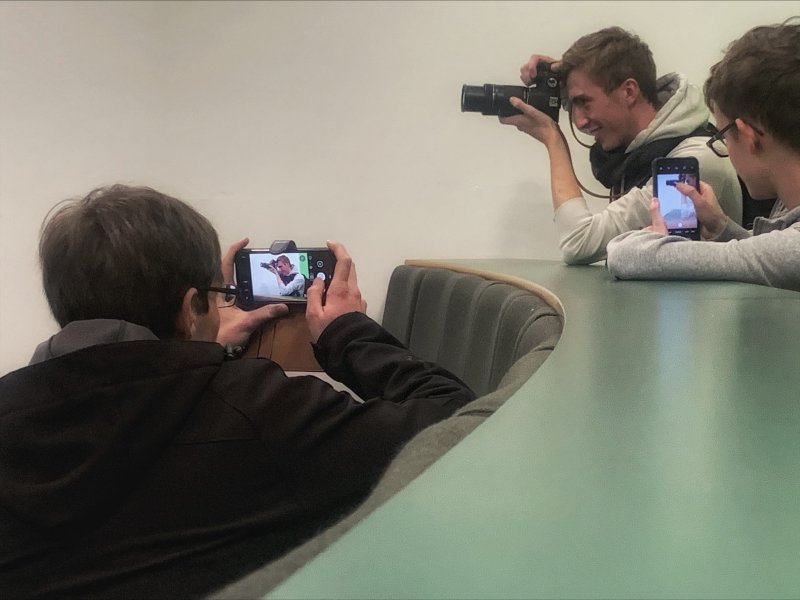
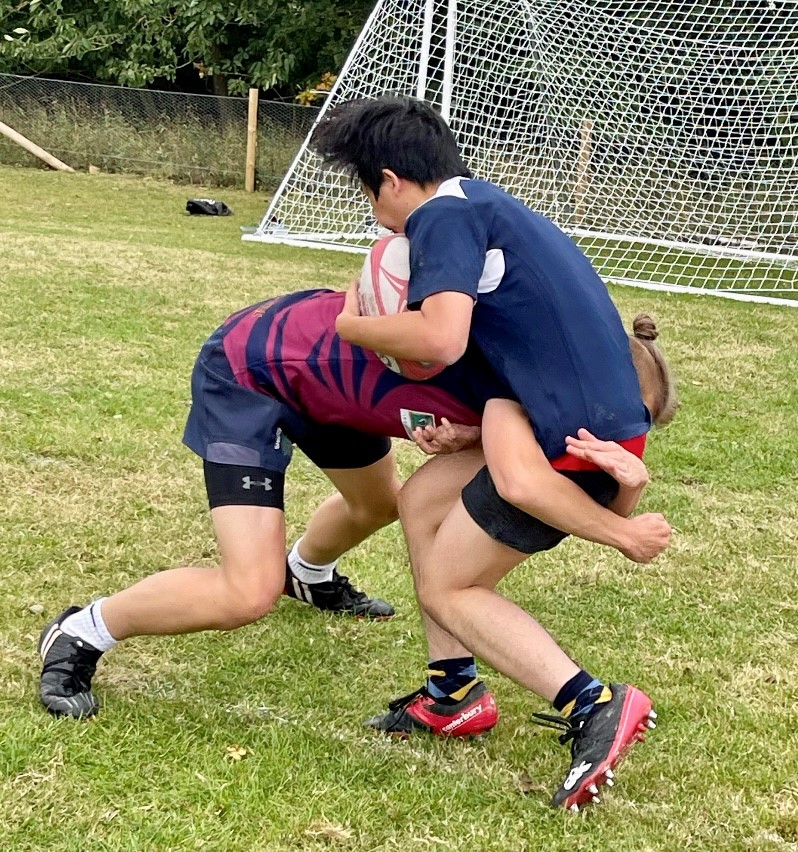
As a Sixth Form we believe in providing opportunities to engage, inspire and challenge all students during your two years of study. We manage this by delivering an Enrichment Programme of activities which all our students have the opportunity to take part in; all of which are designed to engage, motivate and develop new skills across a range of fields (including the arts, sports and education). In preparing our students for the future this weekly event provides a range of opportunities to gain new experiences, develop life skills and pursue interests.
During Year 12 you will be timetabled to attend 2 periods per week of the Enrichment Programme. How this works will be explained to you when you start in the Sixth Form, but it is important that you remember this forms an important part of your timetable as a Sixth Form student at Comberton and that the staff you work with may be asked to provide a reference towards your UCAS or future employment applications just like your other subject teachers.
Enrichment options for Year 12 currently include:
- Advocacy
- Art
- British Sign Language
- Care in the Community
- Music
- Photography
- Theatre Production
- First Aid
- Mentoring
- KS3 Literacy Support
- OCR Level 3 Cambridge Advanced National is Sustainability
- Robotics Building
- Sports Teams
- Recreational Sport (including badminton, table tennis, football, gym, netball, trampolining, dodgeball)
Alongside the Enrichment Programme, throughout the year you will participate in 20 hours of Life Skills sessions (Personal Development). These sessions are a balance between preparing you to manage your current lives and laying the foundations for managing future experiences. There is a significant chance that you may leave home after your A-Levels so your Life Skills sessions will ensure that you continue to learn about issues with real-life relevance, particularly at this crucial transition point in your lives. These sessions are in addition to your fortnightly year group assemblies that will cover similar themes.
Our overriding aim is to ensure that have the knowledge and understanding, skills, strategies and attributes that you will need for independent living and the next stage of your education or career.
The key areas that are covered at CSF are:
- Personal organisation and study skills, revision skills
- RE and word views
- E-safety
- Healthy relationships, consent and sexual health
- Drug and alcohol abuse awareness
- Mental health and wellbeing
- Personal finance
- Preparations for your next steps Post-18
- Diversity and inclusion
Beyond our timetabled Enrichment and Life Skills programmes, we have a huge range of extra-curricular opportunities available for students to take part in. Some of these activities take place at lunchtimes and others run after school.


Super-curricular
Super-curricular activities are a great way to explore your subjects in-depth and discover topics you are really interested in, and they can also help you to confirm that you’ve chosen the right subject to study at university.
Super-curricular is different to extra-curricular. Extra-curricular activities are those outside of your chosen subjects (including what we would call enrichment), and unrelated to your studies, whereas super-curricular activities take the subjects you study further, beyond what you have learnt at school or college.
Super-curricular participation can enhance any future university, apprenticeship, employment applications (e.g. your personal statement), give you greater confidence in your subject choice, show that you are serious about your area of study, and give you a wealth of ideas to draw upon in discussions if you’re invited to interview.
It’s likely that you’ll develop new ideas and opinions, critical thinking and analytical skills, and an ability to understand new information from different sources – this is all great preparation for succeeding in employment and at university.
At Comberton Sixth Form, our Super-curricular offer includes:
- Opportunities for subject based trips and visits to extend your learning
- Our online use of Padlet (links below) for each subject allows you to find recommended books, journal articles, videos, films and podcasts that are part of our departmental Super-curricular ‘reading lists’
- Padlet also aims to flag seminars and lectures, often online and academic competitions that take place in our A-level and BTEC subjects